


- ISSUE 02Addressing Human Rights ViolationsFLAGSHIP ISSUE · EXTREME HEAT
Start with the simplest question in the whole issue — one that should take a thermometer and one second to answer.
How hot is it on the line?
No one can tell you. On floor after floor, there is no thermometer on the wall.
So a worker measured it herself — 35°C, on her phone.
What is not measured cannot be claimed. The not-knowing is part of the design.
Q · 01You can’t prove it. But you can feel it. Then what?
Follow the summer calls and “then what” turns out to have three answers. None of them is a real option.
Option 01Endure it.
The pace is set by piece rates and order deadlines. A pause costs money that is not yours to lose.
Option 02Equip yourself.
Night shifts where the cooling stays off — so workers
buy their own personal fans
and point them at the machines they are paid to keep running.Option 03Faint quietly.
A few workers feel faint every summer. Not serious.
— the most frightening sentence in the case records, because of how calmly it is said.The protocolNone. No one is named to call, no steps on the wall, no drill.The training“On the wall there is one small first-aid box. Nothing else was ever said.”The recordFainting that is never written down anywhere is, officially, fainting that never happened.Meanwhile, inside the body~35°Air reaches skin temperature. The air stops cooling you; sweat becomes the only exit — and humidity is already closing it.
37–40°Midsummer beside the machines. The body is in net heat gain while working muscles add more; core temperature climbs past 38° — cramps, dizziness, fainting. Heat exhaustion.
40°+NIOSH / CDC criteria · OSHA technical manualCore, not air: heat stroke. Sweating shuts down and body temperature can spike within 10–15 minutes. A medical emergency — on a floor whose whole system is one first-aid box.
Between the heat and the worker there is supposed to be a system. There is a first-aid box.
The wider recordHer three non-options are not a local failure — they are the global default. Most jurisdictions on earth set no legal maximum working temperature at all; even the world’s largest economy has a heat standard proposed but still not finalised. And “not serious” keeps a ledger of its own: 26.2 million people are living with chronic kidney disease linked to heat at work.
ILO, Heat at work, 2024 · Ius Laboris global survey · US OSHA rulemaking record▣ Reconstructed from case records · anonymisedQ · 02There is money for this. Why has nobody heard of it?
A heat allowance exists in regulation: real money, owed per working day once the floor cannot be kept cool, paid as wages — not as favours.
Written in regulation- An allowance owed for every working day above the threshold.
- Part of wages — not welfare, not a gift.
- Cannot be replaced by goods: not by drinks, not by ice.
Arriving on the lineI have never even heard of it.
— a worker in their fifth year on the job.- On the hottest days: a bottle of salt soda, sometimes ice. Presented as generosity.
We can’t apply. No one would listen to us.
A right nobody tells you about is a right on paper only — and the paper stays in the office.
The wider recordThe paper is heavier than it looks. Since June 2022, a safe and healthy working environment is one of the ILO’s Fundamental Principles and Rights at Work — the same tier as the bans on child labour and forced labour, binding on every member state and already embedded in every supplier code that cites them. Heat protection is not a welfare extra. It sits inside the floor.
International Labour Conference, 110th session, 2022 · Conventions 155 & 187 designated fundamental▣ Reconstructed from case records · anonymisedQ · 03Who owns the cool air?
Walk one workplace in a heatwave and read the answer off the walls. Cool air is not scarce. It is allocated.
Management — air-conditioning The floor, day — fans, at best The floor, night — nothing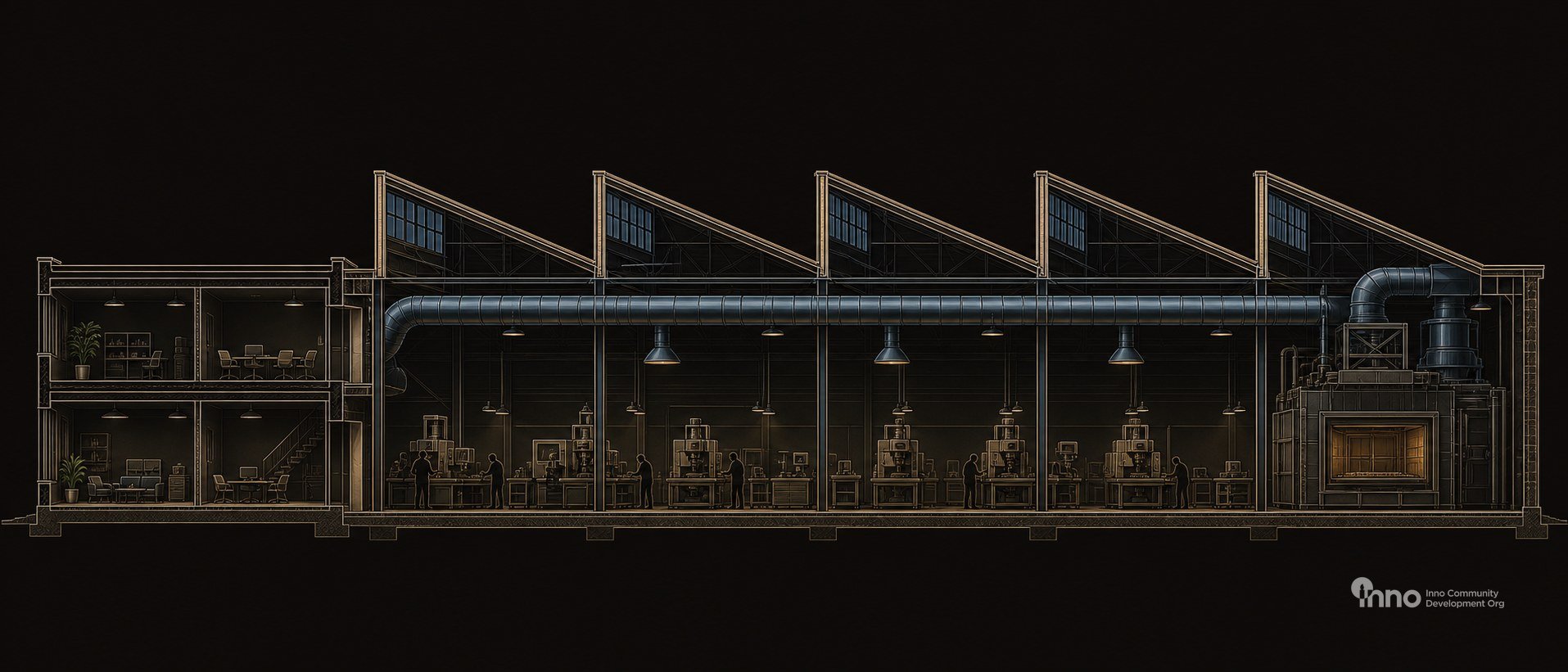 ▣ Toggle the shift · cool air follows rank, not need · reconstructed from case records
Heat obeys the org chart. The temperature on the floor is set in a cooler room.
The wider recordThe science has a unit for exactly this unfairness: occupational heat is measured by combining air temperature, humidity, radiant heat and air movement — which makes the oven line and the back rows measurably different jobs. Most audits record none of the four. The cost is not abstract either: by 2030, heat stress is projected to erase 2.2% of global working hours — the equivalent of 80 million full-time jobs — and on piece rates, that loss lands on the worker’s payslip first.
WBGT / ISO 7243 methodology · ILO, Working on a warmer planet, 2019▣ Reconstructed from case records · anonymisedQ · 04Why don’t workers simply complain?
In the case records, the loudest thing is not the heat. It is the fear of being heard saying so.
“If we talk about this here — will the boss find out?”before describing the workshop“Please don’t quote what I said. I don’t want to lose the job at my doorstep.”after describing it“This chat — only the two of us can see it, right?”asked twice in one conversationThe morning after a complaint reached the buyer, a supervisor was already calling: “Why didn’t you come to us first?”case record, the day after escalation“We reported it to everyone. There was no response.” — for four years.night-shift workerThe thermostat that is truly broken is the complaints channel — and it fails at every temperature.
The wider recordThe UN Guiding Principles set eight effectiveness criteria for any grievance channel — and the first is legitimacy: trusted by the people it exists to serve. Every whispered “will the boss find out?” in these records is that first criterion, failing in real time. A channel workers are afraid to use does not count as a channel.
UN Guiding Principles on Business and Human Rights, Principle 31▣ Reconstructed from case records · anonymisedQ · 05So what does it actually take to fix?
Here is the arithmetic that makes extreme heat unlike any other violation we carry: the remedy is cheap, instant — and waiting.
YEAR 1Reported inside the factory — supervisors, department heads.
No responseYEAR 2Reported again. “We report it to anyone.”
No responseYEAR 3Reported again. Workers buy their own fans and keep working.
No responseYEAR 4The question reaches someone who has to answer — anonymised, verified, put to the buyer.
That same evening — ventilation onFour years of asking. One evening of fixing.
01Anonymised intake. The worker’s identity is protected before anything moves.
02Facts confirmed with both sides — not believed, confirmed.
03The buyer is brought in — the question lands where it must be answered.
04That night, the ventilation came on. Weeks later: more fans, in other departments too.
05Follow-up, not file-closed. The worker was asked whether the remedy held — and rated it five out of five.
It was never about the price of a fan. It was about who has to answer the question.
The wider recordThe arithmetic scales. The ILO estimates that workplaces implementing heat measures would save up to US$361 billion globally — prevention is not a cost centre, it is the cheapest line in the budget. What the global record lacks is not money or method. It is a route from the floor to someone who has to answer — the same route this case travelled in one night.
ILO, Heat at work, 2024The line provides consultation, confidential listening, complaint support, communication assistance and referral. Any external communication follows fact confirmation, case assessment and informed consent. Referral connects workers to specialist services — Inno does not itself provide arbitration, medical treatment or psychotherapy.
▣ Reconstructed from case records · anonymisedQ · 06How hot is your supply chain tonight?
Not the audit-day reading. Tonight’s. The night shift’s. The back rows’. The floor where the thermometer never went up.
“When inspectors come, everything is just a show.”
A worker · from the case records · summer 2026
If that sentence is true anywhere in your chain, every number in your audit is a costume. And the question is no longer voluntary: supply-chain due-diligence law in major buying markets is moving from pledge to statute, with workplace safety inside its scope. The question in this page’s title is on its way to your desk — the only choice left is whether you answer it before it is asked. There is a faster way to know: a channel workers already trust, at the speed of the emergency rather than the audit cycle.
FAQAsked plainly, answered plainly.
Is extreme heat at work a human rights issue?
Yes. The rights a heatwave violates already exist — rest, water, safe work, the right to refuse dangerous work, an allowance where law provides one. Almost every condition that makes workplace heat deadly is a management decision, which means it can be decided differently.
Isn’t this what audits are for?
Audits visit; heat lives there. An announced audit sees the day shift, the front rows, the season the visit falls in — and, as one worker put it, “when inspectors come, everything is just a show.” Continuous, worker-trusted channels see the night shift, the back rows, and July. The two are not substitutes; one verifies documents, the other hears the floor.
Why do heat cases so rarely become complaints?
Because the chain breaks three times before a complaint exists: the floor is not measured, so nothing can be proven; the entitlements are not announced, so nothing is claimed; and the channels punish the person who speaks, so nothing is said. A workable channel has to fix all three at once — measurement, information, and safety from retaliation.